
As a result, they are not relevant to Ball’s central concern. His victims are less often heads of state than their loyal functionaries. His study lays bare just how vulnerable the proconsuls, diplomatic corps and security enforcers for the great powers were to the determined assaults of their enemies.
Once the favoured tool of freedom-fighters, independence movements and their insurgent wings, assassination is now an acknowledged branch of the state and a key weapon of its armed forces.
The overseas staff did not feel the same way. Its members were stabbed and shot in their dozens before their ministerial masters could be persuaded to change their minds and put in place appropriate means to protect them.
What was also striking about the announcement was the pride and brazenness with which the IDF celebrated what it had done. Barely a decade earlier, Israel, along with the United States, the United Kingdom and the European powers, would have stonewalled questions about responsibility for the attack or retained a dogged stance of plausible deniability. Governments didn’t assassinate people – that was for political fanatics and religious extremists.
Over the course of the 1970s and into the 1980s, the troubles in Northern Ireland increasingly found their way to the British mainland. As they did so, the government’s efforts to sustain the Asquithian script collapsed. The implicit assertion that an acceptable level of assassination was the price of leadership in in a liberal, open, democratic society was no longer viable.
Insisting that the killings were the work of a small number of fanatics – and not the expression of widespread, well-organised opposition – meant the political ferment could be tamed or ignored. Meanwhile, talks slowly unwound behind closed doors.
1) There was evidence of an organised assassination conspiracy.
Despite the public and political hunger for evidence of cloak-and-dagger conspiracies, Ball patiently points out that no evidence to support such a
conclusion was found. These assassinations were the work of rogue individuals motivated by personal vendettas, private hatreds or mental illness.
Alexander Zemlianichenko/AAP
The resolution of these larger issues of legitimate authority rested on extended dialogue between colonial governments and the emerging political elites in occupied territories. They required the sort of detailed negotiation and painful compromises that would not be possible amid the white heat of popular uprising. Hence the need to sustain the illusion of calm.
Review: Death to Order: A Modern History of Assassination – Simon Ball (Yale University Press)
As the first armed drones came into use, the George W. Bush administration refined the definition of assassination to exclude pre-emptive “defensive” killings against named individuals deemed to pose a threat to the US or its personnel. From there, it was a short step to the large-scale use of targeted killings across Central Asia, the Middle East and West Africa.
Determined assaults
Most famously, US investigators worked diligently to uncover Soviet involvement in the shooting of President Kennedy in Dallas in November 1963, both in the original Warren Commission and the House of Representative Select Committee on Assassinations, convened 13 years after the killing.
This took so long because, though governments recognised in private the
threat posed to their rule by well-organised opposition, they were committed to a public posture of underplaying the significance of isolated acts of political violence, and the popularity they enjoyed among occupied or oppressed people.
For the better part of a century, those committed to freedom from foreign rule and economic oppression blew up, stabbed, but most commonly shot with small arms at close range, representatives of occupying governments. Targeted killings occurred in India, Ireland, Algeria, Malaya, Vietnam, Palestine, Egypt, indeed every corner of the globe once governed by empire. The violence even reached into the colonisers’ capital cities.

Walt Cisco, Dallas Morning News, Public domain, via Wikimedia Commons
One of the book’s more startling revelations is how long it took the British, especially, but the French and the Americans as well, to determine that the threat posed to their staff on overseas posts in volatile environments was unreasonably high. For decades, imperial prestige would not tolerate visible displays of nervousness from its public representatives about their personal safety. Until well after the second world war, it was felt in London that too great an attention to security damaged the ruling power’s mystique of authority and let the whole side down.
In 2007, the US military had 24 drones devoted to assassination. Within two years, that number had risen to 180, with 15 times the payload of the older models. As of 2025, the US Department of Defense – recently renamed the Department of War – had more than 11,000 unmanned aerial vehicles at its disposal. Not all of them are dedicated to assassination, admittedly, but do the maths.
As the IRA’s attacks against the British political elite became more sophisticated, more targeted and more lethal, there was a critical shift in elite attitudes towards security. In 1982, “Protection” became a permanent command within the Metropolitan Police Force.
While many of the headline assassinations of the past century – Mahatma Gandhi, John F. Kennedy, Martin Luther King Jr., Robert Kennedy, Swedish prime minister Olof Palme – are touched upon, they are not the focus of Ball’s history.
The “liberal script” that shaped the British government’s response to the assassination of its representatives for much of the 20th century emerged under H.H. Asquith’s prime ministership (1908-1916). It reiterated three key points:
Assassination had no significant influence on the course, conduct or result of the second world war. But the war had a massive influence on the evolution of
assassination as a tool of state.
Each of these assassinations spawned extensive and often prolonged inquiries in pursuit of a political motive, the hidden hand of a hostile power. The official investigation into Palme’s killing in February 1986 was only closed in 2020.
The announcement, with a hotlink to a grainy video of the air strike on al-Jabari’s car, marked the opening of another IDF incursion into Gaza. As historians Adi Kuntsman and Rebecca L. Stein noted in their book Digital Militarism, it made Israel’s Operation Pillar of Defense “the first military campaign to be declared via Twitter”.
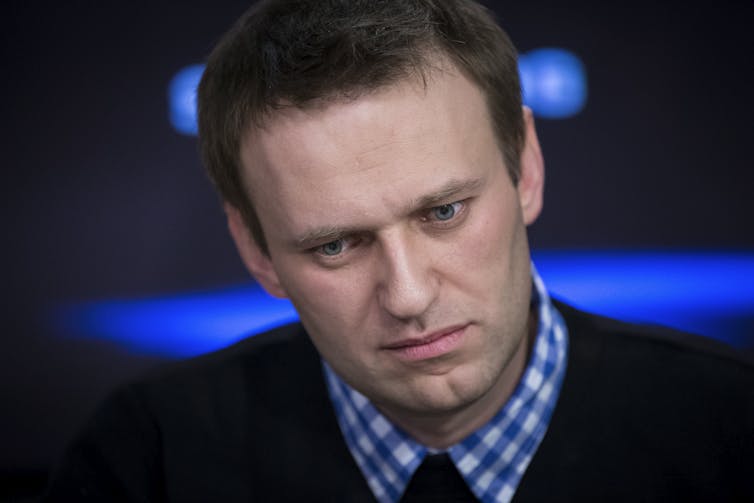
This week’s news that Russian dissident Alexei Navalny died after allegedly ingesting poison from a South American frog while imprisoned in the Arctic is a reminder that Russia also has a long history of assassinating critics of the regime.
In an eerily apposite simile, Ball argues that the study of assassination “is akin to running a razor blade down the history of international politics”. The resulting cut may be narrow, but it is long and deep. It reveals “the actual exercise of power in international politics”.
That the Americans, and a number of their allies, had been killing – or trying to kill – their enemies was, Brennan observed, “the world’s worse-kept secret”. It was time for the “charade” to end, to call a spade a spade – or more pertinently, to call a targeted killing an assassination.
By the 1950s and 1960s, some democratic governments, most notably the French and the Americans, oversaw or overlooked retaliatory political killings against their enemies. This was accepted to the point where large scale military conflicts in Algeria and Vietnam were conducted, in no small part, through industrial scale programs of assassination.
Honourable assassins and clandestine activities
For those committed to liberal democracy, it was a short step from the principled hitman to the belief that strong democratic powers should have the capability to carry out their own targeted killings. They would preempt the rise of intolerance by taking out its spokespeople, fight fire with fire.
With its godlike surveillant power, its all-seeing eye in the sky, the drone knows what you have been doing and where you are. There is no escaping its vengeance. The ides of March are here.
Public domain, via Wikimedia Commons
Questions of authority and protocol became central. By the early 1960s, the specialist, “executive operations” branch of the CIA was busy destabilising regimes across Central America, arranging, arming and supporting insurgencies and assassinations. Other branches of the agency were working up the necessary directing documents – an assassination handbook for the man in the field – and determining policy around such clandestine activities. In short, they were deciding who got to authorise assassination.
In Death to Order: A Modern History of Assassination, Simon Ball offers a painstakingly researched and highly entertaining history of assassination over the past hundred years or so. Ball is a professor of international history and politics, and these specialisms shape the book.
While lucrative employment opportunities opened up for former special forces
personnel in the newly minted security industries, American defence researchers continued to finesse the capacity to target enemies with greater accuracy from ever further away.
The two Czechs who killed Nazi general Reinhard Heydrich, the various botched efforts to assassinate Hitler, even the disturbed or highly principled Irish noblewoman Violet Gibson, who in April 1926 shot Mussolini in the “snout” (in Lisa O’Neill’s inimitable rendering) but failed to kill him, provided many living – though more often dead – examples of the “honourable assassin”.
Targeted killings
Accordingly, Death to Order is less interested in the developing weaponry or changing tactics needed for targeted killing – until the development of the drone, these remained largely unaltered for more than a century – than it is in assassination as a weapon of statecraft.
Death to Order is replete with arresting episodes and striking anecdotes, not least a young Queen Elizabeth II wondering why nobody had slipped something into the coffee of the troublesome Egyptian nationalist leader, General Nasser.
John Downing/Getty Images
Things had changed. And how. In the same year, President Barack Obama instructed John Brennan, his assistant for homeland security and counterterrorism, to make an unambiguous public statement of the US’s policy regarding the use of drone strikes to target named enemies of the US. In an address to the Wilson Center, Brennan announced:
As this authority gradually wound its way back to the president’s desk, assassination emerged as a combustible tool of statecraft – one with the potential to permanently blow the acting government’s cover, giving the lie to its protestations of principled leadership.
But perhaps the most significant achievement of Ball’s history is its careful tracing of the emergence of assassination from the shadows of government and military secrecy into the full glare of publicity and propaganda.
3) The conspiracy was dangerous because of the violence of its methods, not
because it was the tip of the iceberg.
2) Very few people were involved in the conspiracy.
In the years since the September 11 attacks, and especially over the last decade, the celebration of assassination as a synecdoche of state power and its remorseless will has served as a compelling deterrent to active opposition and a powerful tool of information warfare.
in full accordance with the law, and in order to prevent terrorist attacks on the United States and save American lives, the United States Government conducts targeted strikes against specific al-Qaida terrorists.
In November 2012, the Israel Defense Forces (IDF) took to Twitter – as it was then – to announce it had killed Ahmed al-Jabari, chief of the al-Qassam Brigades, Hamas’s military wing in Gaza.


