
Spain’s election pits the three narratives against each other: protect households, build more housing or restrict demand.
Protecting renters and managing demand still have a role. But they treat the symptoms, not the cause of the problem, which can only be fixed by building more homes where people want to live.
The other opposition party is a far-right one called VOX. Its agenda combines housing deregulation and reduced immigration, arguing population growth has increased housing costs.
But what that reshaping looks like, and which political forces benefit from it, is unpredictable.
The politics of housing
This is where housing policy collides with housing politics. Building more means allowing greater density, reforming planning and confronting local opposition.
- Spain is in the middle of a political reckoning over housing. Spanish Prime Minister Pedro Sánchez has called an early election for November 29, after parliament rejected his government’s emergency housing measures amid widespread anger over rising rents and housing insecurity.
- In Australia, the day before the Spanish vote, Victorians will go to the polls in a state election, with housing affordability, rents and supply also high on the agenda.
- The political costs are upfront, but the benefits take years.
Housing anger has benefited challengers to incumbent governments globally from both the left and right side of politics.
Protect: shield renters from rising housing costs through rent caps or freezes, stronger tenancy protections and more social housing.
Prior election winners who promised to resolve the problem by building more houses have yet to succeed, but a single electoral cycle may be too short to evaluate a positive result.
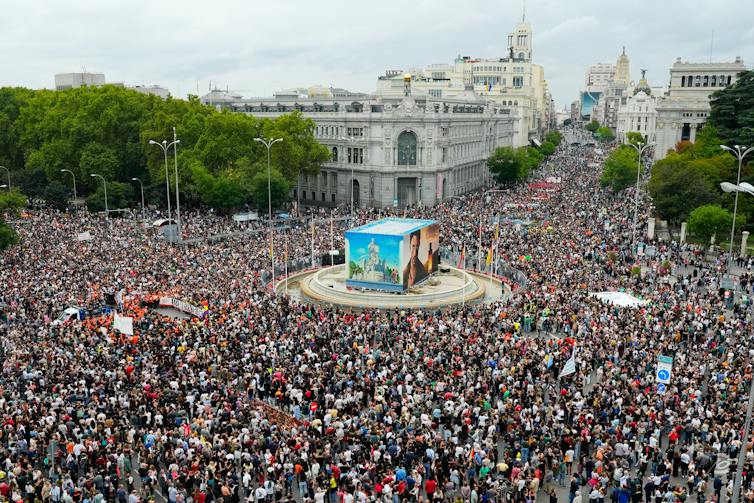
Spanish rents have nearly doubled over the past decade, and housing insecurity has sparked large public protests. Sánchez’s Socialist government has responded with greater state intervention, including rent regulation, stronger tenant protections and more public housing.
Borja Sanchez-Trillo/EPA
For many younger voters, housing is no longer simply an economic issue. It increasingly shapes how they view governments and parties.
In Australia, home ownership among 25- to 29-year-olds fell from 50% in 1971 to 36% in 2021.
In the forthcoming Spanish elections, the opposition parties offer different solutions to the housing problem. The conservative Partido Popular (PP) says it will support more construction, faster approvals, land release and financial assistance for home ownership.
Who benefits from the anger?
Housing anger can help win an election. Turning that anger into enough homes is considerably harder and takes a long time.
In New York, Democrat Zohran Mamdani won the mayor’s election in 2025 campaigning to freeze rents.
Restrict: reduce housing demand, most commonly by reducing immigration.
The timing is pure coincidence. The politics are not. Across advanced economies, housing is reshaping political loyalties, particularly among younger voters and renters.
In Victoria, the Carroll Labor government points to planning reforms and its target of 800,000 additional homes over a decade. The Greens advocate rent caps and more public housing. The Coalition argues taxes, regulation and planning processes have made homes harder and costlier to build. Who is correct?
Our research shows rent controls offer tenants relief and security, but poorly designed controls can discourage investment in rental housing.
Three approaches, one solution
Over the coming weeks, voters in Spain and Victoria will hear versions of all three. A useful test for each promise is simple: will it lead to more homes being built?
Labor combined its target of 1.2 million new homes with expanded assistance for first-home buyers. The Coalition emphasised reducing migration to ease housing pressure. The Greens campaigned for rent controls and more public housing, but lost seats in Brisbane, despite making renters a central constituency. The existing housing pressures haven’t eased since then.
In a snap election in the Netherlands in 2025, the progressive D66 party won on campaign promises of building ten new cities and solving the housing shortage in 2025.
The common thread is not ideology. It is the vulnerability created when voters believe the housing system has failed them.
Cutting migration may ease demand temporarily but does not increase the number of houses in the market. First-home buyer assistance boosts purchasing power without adding homes and can push prices higher.
These approaches are not mutually exclusive. But they tell voters very different stories about what has gone wrong: too few homes, an unfair market, or too many people competing for housing. The story each party tells follows political rhetoric and what is perceived will win votes.
Political responses to the housing crisis fall into three broad camps:
Build: increase housing supply by releasing land, allowing greater density, speeding up approvals and reducing barriers to construction.
Taking the easy way out
In Ireland, housing helped drive democratic socialist party Sinn Féin’s 2020 breakthrough among younger voters.
Australia’s 2025 federal election showed a similar contest.
“Freeze the rent” promises quick relief. “Cut migration” names a culprit. “Reform planning and build more homes” is a much harder message.
The main driver of rising house prices is severe restrictions on housing supply, not migration driving demand. When planning rules, infrastructure gaps or slow approvals stop enough homes being built, extra demand flows straight into higher prices and rents.
On the other hand, in the United Kingdom, right-wing parties have linked housing shortages to immigration, winning elections.
Population growth, interest rates, taxation, regulation and construction costs all influence prices and rents.


