
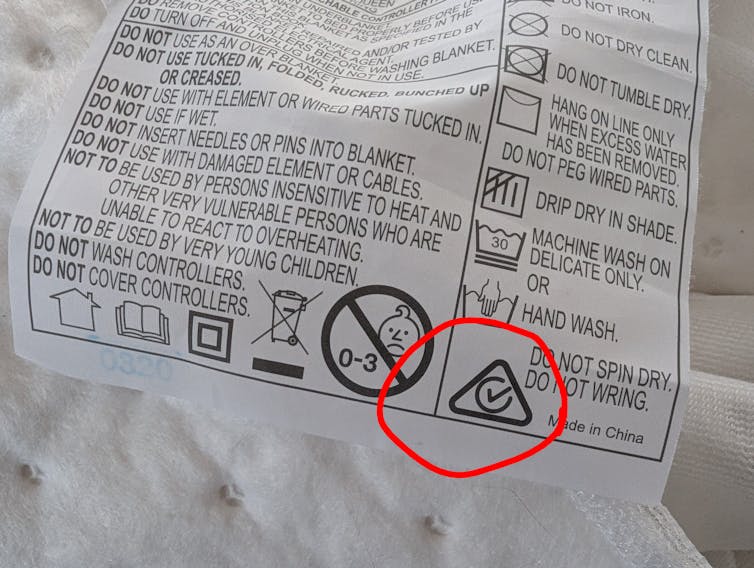
How do you know it’s compliant? The tag won’t necessarily list the standard. Look for the regulatory compliance mark – it looks like a checkmark in a triangle. This symbol indicates the supplier has declared the product complies with applicable Australian safety requirements.
All that said, when properly certified, correctly used and regularly inspected, electric blankets and throws are generally considered safe household appliances.
Is it compliant?
Importantly, an electric blanket should never actually feel really hot – this can lead to heat stroke and be dangerous. Modern blankets are designed to provide gentle and consistent warmth rather than intense heat. A blanket that becomes excessively hot in one area may actually be showing signs of an internal fault.
Electric blankets should ideally be stored flat or loosely rolled rather than tightly folded. Don’t put anything heavy on top when storing them, either.
Make sure to check the blanket carefully before starting to use it in winter, inspect it regularly during use, store it correctly, and replace it when signs of wear begin to appear.
As long as you do the above, you should be able to use a heated blanket or throw without fear, and stay cosy during the colder months.
That’s because over time, the internal heating wires can weaken at the points where they were folded and under pressure. In some cases, damage may not even be visible from the outside.
Certain groups of people may need extra caution when using electric blankets. Older adults, people with diabetes and individuals with reduced heat sensitivity or nerve-related medical conditions may not notice overheating or burns quickly enough.
The Conversation
Is it old?
Pets can also create hidden hazards. Cats and dogs may scratch, chew, or puncture the fabric, potentially damaging the internal wiring without you noticing. Even small wire breaks can increase overheating or fire risks.
There are several warning signs that may indicate internal wire damage, which means the electric blanket is unsafe and should no longer be used. You should immediately unplug and replace a blanket if you notice:
Is it stored properly?
But some of us are understandably worried about fire risk. So how do you know your electric blanket is actually safe to use?
Don’t assume your blanket is fine simply because it still heats up, especially if it’s old. A safe electric blanket should:
The first thing to check – ideally before you buy – is whether the blanket complies with Australian safety requirements. Electric blankets sold in Australia must comply with the Australian and New Zealand Standard 60335.2.17, which applies to flexible heating appliances such as electric blankets and heated throws.
The good news is there are several simple checks you can use to determine whether an electric blanket is safe.
- hot spots or uneven heating
- scorch marks or burn smells
- frayed fabric or exposed wires
- stiff or lumpy sections inside the blanket
- flickering heat
- a controller that feels unusually hot, loose, or damaged.
Use general caution
But damaged, ageing or poorly manufactured blankets really can create serious fire and burn risks. According to Australian fire authorities, we should treat electric blankets like any other electrical appliance and inspect them regularly for damage.
One of the most common mistakes people make is folding blankets tightly during summer storage. This can damage the internal heating elements and weaken insulation around the wires.
Another important factor is the age of the blanket. Many Australians continue using electric blankets for far longer than recommended. Most manufacturers and safety organisations generally recommend replacing electric blankets after about five to ten years, depending on their condition and frequency of use.
Modern electric blankets are generally considered safe when they comply with Australian electrical standards, as long as you follow the instructions.
A quick checklist
As temperatures drop across Australia, many households are pulling electric blankets and heated throws out of storage. For many, they’re among the cheapest and most energy efficient ways to stay warm during winter.
- display the regulatory compliance mark
- include manufacturer details and instructions
- heat evenly across the surface
- have no visible damage or exposed wiring
- include safety features such as an automatic shut-off or timer.
Older blankets may lack many of the safety protections now common in newer models, including overheat protection systems and automatic shut-off technology. These safety features are worth considering when purchasing a new blanket.
The mark is especially important when buying products online – some imported electrical goods may not comply with Australian safety standards. A blanket may appear normal on the outside while containing poor-quality internal wiring or unsafe electrical components.


