
Prada has been known for its investment in other luxury fashion houses. It previously bought a stake in Fendi for US5 million in 1999 before selling in 2001 for US5 million, and bought a 9.5% stake in Gucci in 1998 before selling in 1999.
Her background as an outsider to the fashion industry has been seen as her ultimate strength, affording her the ability to take risks and challenge every style under the Prada brand.
The Prada Group has made a move to save the Italian brand from possibly being consolidated into the larger French groups Louis Vuitton Moët Hennessy (LVMH) and Kering, which own considerable luxury fashion brands.
The brand’s identities will remain separate, but Prada is likely to capitalise on the strengths of each brand, with Prada’s excellent craftsmanship and local manufacturing being utilised for the Versace brand. The Prada Group will have considerable work to do to relaunch the Versace brand and remain globally competitive, including deciding which market they wish to appeal to.
So, will Versace lose its sexiness? Will Prada mess with its ultra cool “ugly minimalist” style? It is unlikely fashion followers will see much change in either brand. But it remains to be seen if they can survive in partnership in the tough global fashion market.
The ‘sexy’ Versace
The iconic and sexy Versace brand was founded by Gianni Versace in 1978 in Milan, when he launched his first women’s wear collection.
Prada will become the new owners of the Versace brand, under a €1.25 billion (A.2 billion) deal.
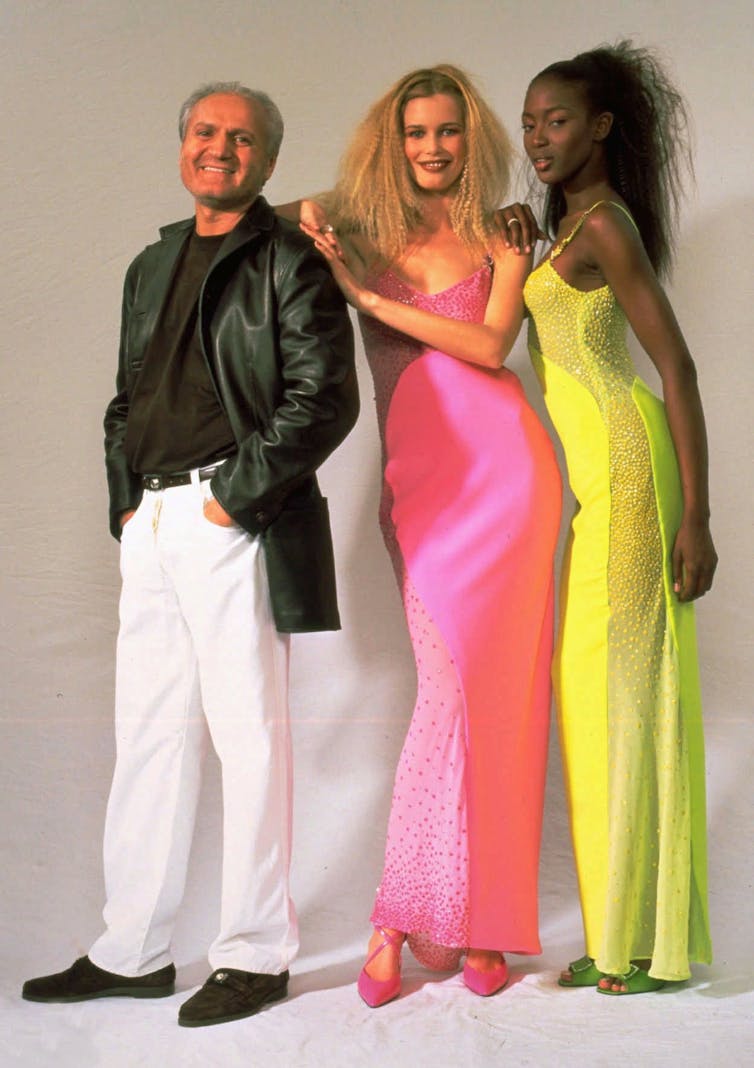
AP Photo/P.Castaldi
In March, Donatella Versace stepped down as the brand’s creative director and was replaced by Dario Vitale, who previously worked for the Prada Group. This marked the first time in 47 years that Versace was not led by a family member.
The establishment of the luxury fashion house was a family affair. Gianni’s brother Santo ran the commercial side of the business, and his younger sister Donatella also became a designer and creative director with the brand.
Under her creative leadership, the fashion house saw extravagant runways and advertising campaigns. But, over time, the fashion house struggled to maintain scale like its competitors.
The ‘luxury’ Prada
In today’s competitive market, luxury fashion brands such as Prada are increasingly focusing on “selling to the 1%”, targeting ultra-wealthy customers. This stands in contrast to Versace’s historical focus on serving the middle market with more “accessible luxury” pricing.
Mario Prada founded Prada in 1913 as a luxury leather-goods business.
Versace has recently struggled both financially and in keeping up with the larger luxury fashion houses. Before the sale, Versace was owned by Capri Holdings, which also holds brands including Michael Kors and Jimmy Choo.

Vittoriano Rastelli/Corbis via Getty Images
The rise of Italian fashion provided a philosophical rivalry with French fashion houses, who focused on couture compared to Italy’s more ready-to-wear domestic luxury goods.
The Versace deal is just another complex acquisition within the fashion landscape.
The business didn’t find its luxury fashion house status until Miuccia Prada took over the business from her grandfather in 1978. Miuccia came to the brand with no prior design experience and with a PhD in political science.
Originally studying architecture like many of the great 1950s Italian fashion designers, his flamboyant and erotic style was soon embraced by many celebrities, such as Princess Diana and Elton John.
The ultimate rivalry
Will the luxury fashion house rivals be able to survive each other’s style?
In 1978, Miuccia became the fashion designer for Prada and, in 1993, its sister brand Miu Miu. Both Prada and Miu Miu would come to be known for a clean and minimalist style of fashion, while also being shocking.
While there may be a localised rivalry, the true competition is between the Italian and French luxury fashion houses.
Miuccia Prada has dressed many celebrities, including Miu Miu “it girl” Sabrina Carpenter and Nicole Kidman, who loves a Prada dress.
As family-owned Italian fashion houses with markedly different styles, Prada and Versace have often been called “rivals” by Vogue journalists and business analysts. Prada is minimalist; Versace is loud and flashy. Prada is a northern Italian brand; Versace is a southern Italian brand.
What of the future?
The Prada Group is now a public traded company valued at approximately US.27 billion (A.2 billion), with majority ownership in the hands of Miuccia and her husband Patrizio Bertelli.
Prada owning Versace ends an era of rivalry between two of the most influential Italian fashion houses. But it does provide a united front of Italian fashion.
Until the mid 20th century, Paris held a monopoly over women’s fashion. Italian fashion houses gradually grew after the second world war as the French struggled with material shortages. But the French brands continued to dominate the fashion hierarchy with the release of Dior’s “new look”.
Miuccia invented the “ugly chic” style: taking unconventional items or materials that are considered ugly and adding high fashion value to them, such as the iconic Prada Vela bag made from nylon instead of leather. Introducing nylon fabric into luxury fashion was a shocking move in 1984.
After Gianni was tragically murdered outside his Miami beach mansion by Andrew Cunanan in 1997, his sister Donatella continued the Versace legacy.


