
It is highly unlikely sufficient resourcing would be available in the ACT to check the time all dog-owners spend with their dogs each day. How this would be calculated and recorded remains unclear.
The most important part is to see if you can observe what happens when they’re alone (you could set up a camera). Try to make changes and seek professional advice if you can see their welfare is at risk.
We’ve genetically selected dogs to want to be with us, and unfortunately this has led to many not coping well when they’re alone.
Authorities in the ACT have released draft regulations for the welfare of dogs. One inclusion getting attention is a guideline “requiring all dogs to have a minimum of three hours of human contact daily”.
If you can’t manage three hours, just aim for what you can and try to carve out special time with them (perhaps by reducing your screen time where possible).
It is likely the quality of time spent with our dogs is more important than the quantity.
Human contact is a good thing for dogs
And dogs have different needs. A one-year-old dog might love going for a big walk, but a 12-year-old dog with arthritis may find that painful. Some dogs love chasing balls, and others would rather watch grass grow.
Three hours across a 24-hour period is probably achievable for many people, once you factor in walks, pats, feeding time and some attention at home.
The regulation may also encourage people to think more about fun things to do with their dog, such as develop (or continue) a play routine. Creative play can help boost attachment between dog and human.
That said, the draft code may prompt all dog owners (including not-so-conscientious ones) to consider whether they spend enough time with their dogs.
But over thousands of years, humans have selectively bred dogs so they want, and even depend on, human contact.
Effective rules also need to be enforceable.
If we accept dogs are sentient then we must think about their welfare and how to provide for them the best life possible. So, will three hours of human contact guarantee a good life?
What matters most is what you do when you’re with your dog to meet their specific emotional and physical needs – and how long you’re leaving them alone.
Dogs are descended from the grey wolf – an animal which would certainly not integrate easily into a human group.
- barking
- escaping
- destructive digging
- destructive chewing.
That’s why this guideline may struggle to find community acceptance. Good dog owners realise that what you do with your dog is most important, and needs to be tailored to the dog’s emotional needs, rather than just mandating a certain time goal.

Photo by Helena Lopes/Pexels
Quality time matters most
But just mandating a certain number of hours isn’t the answer, in my view.
The purpose of this code is to help dog owners meet their obligations under existing animal welfare laws in the ACT, which see dogs as sentient animals. This recognises that dogs can experience pleasure and pain, and that these feelings matter.
Swedish rules require that “dogs must have their need for social contact satisfied”.
Countries around the world are taking more notice of the needs of dogs.
An estimated 14–29% of dogs have problems related to separation from their owners.
Other problems for inactive dogs might include being overweight, feeling bored or even getting depressed.
What’s important is what you do with your dog when you’re together, to meet their needs.
And it may prompt people considering buying a dog to think about whether they can commit three hours a day.
An easy bonus we can give our dogs is to be present with them.
What’s more, the amount of time a dog can handle alone will depend on the animal. For some, only five minutes away from their human would be long enough to send them into total meltdown.
Complicating matters further, dog owners vary in how they want to spend time with their pet.
Signs of separation-related problems may include:
In Germany, the law requires owners to walk their dogs twice a day for at least an hour each time.
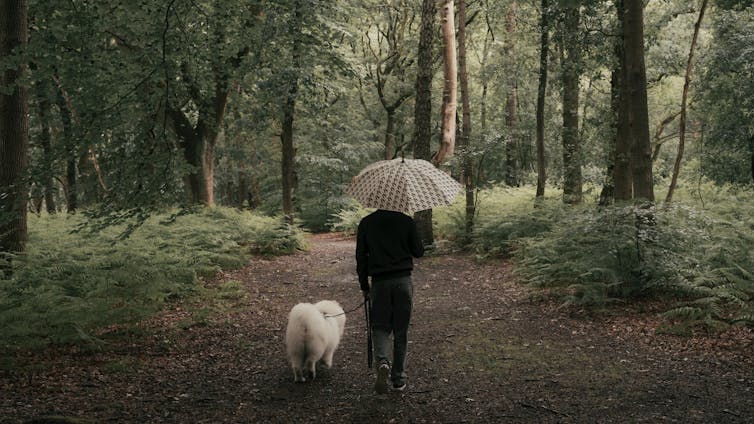
Photo by Haberdoedas Photography/Pexels
An important discussion
Some dogs like lying on the sofa bingeing the latest series with you. Others might prefer long walks, or a strenuous game of fetch.
The ACT’s new draft code recognises this, noting that “dogs are social animals and must not be kept alone for long periods of time”.
But even if this three-hours-a-day guideline is dropped in the ACT’s final code, it’s prompted an important discussion and will overall improve the welfare of dogs.


