
The architecture opens itself up with wide verandas, open corridors and spaces that blur the line between inside and out.
Buildings are more than just shelters. They influence how people live, interact, and define their communities. Understanding this relationship can help us see architecture as an evolving part of society, shaped by both nature and human choices.
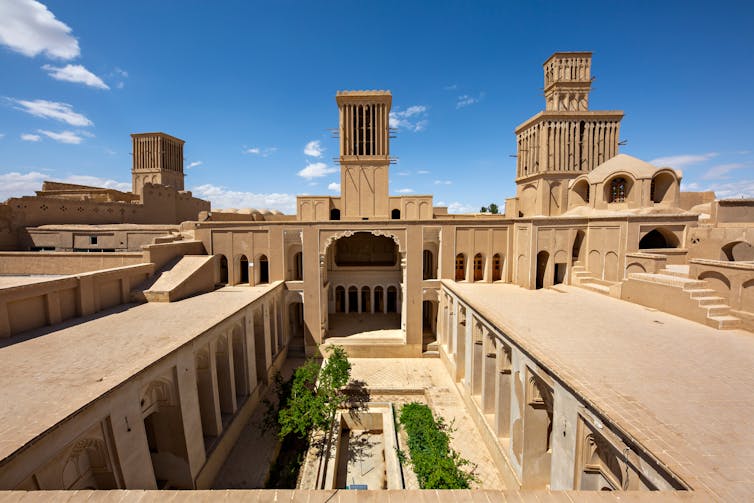
Buildings are oriented inward, centred around enclosed courtyards and largely closed off from the street. This prioritises privacy and thermal regulation.
Yarr65/Shutterstock
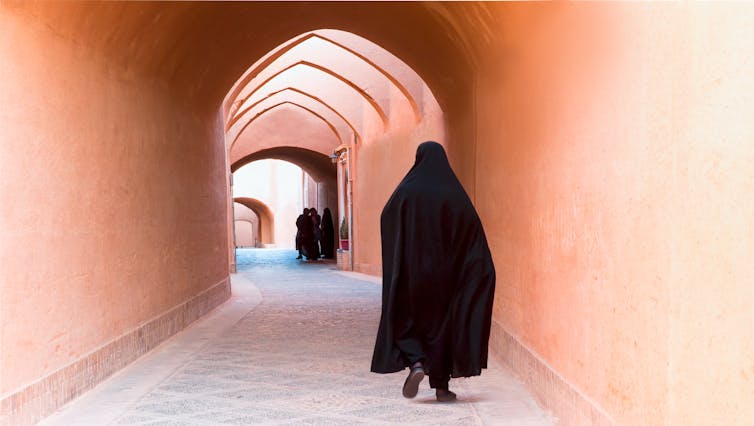
In many desert cities like Yazd or Kashan, domestic architecture was designed to protect not just from heat, but also from public view. This meant women’s daily lives were largely contained within high-walled courtyards, internal corridors, and roofscapes. Here, women could move freely but invisibly.
Architect Amos Rapoport argues that, while climate sets limits, culture, social structures and history play a bigger role in shaping architecture.
The mountains have historically served as both a climatic and cultural barrier, moderating external influences, including Arab conquests. This allowed the region to maintain unique social and architectural characteristics for centuries.
The extroverted north
In both northern and central Iran, buildings adapt to the environment. The humid north features open, outward-facing structures. The arid central regions rely on enclosed courtyards to manage extreme heat.
The demanding nature of desert life meant basic tasks like securing water, preserving food and producing textiles required significant domestic labour.
Sama.GH/Shutterstock
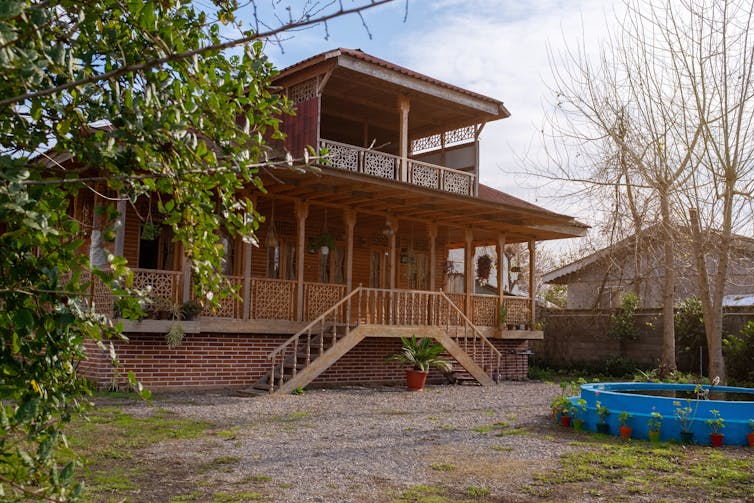
The architecture of northern Iran exhibits an extroverted quality. Buildings are designed to let in the sounds of rain, birds and rustling trees, as well as scents of nature.
The houses don’t only reflect their environment – they also reflect the role of women in these communities.
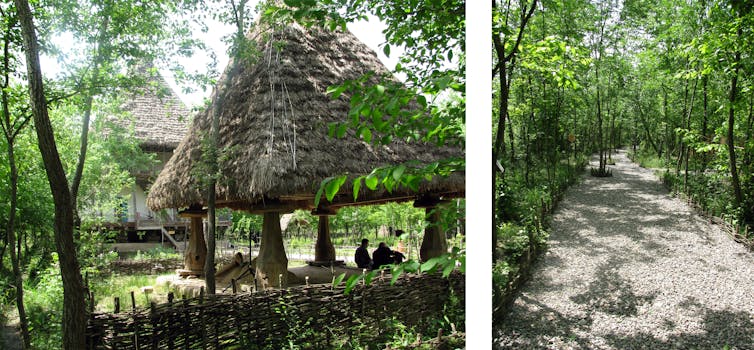
With humid climates and communal living traditions, there are strong architectural similarities between northern Iran and East Asia. Both regions incorporate elevated wooden structures, deep eaves and open layouts to enhance airflow and prevent moisture-related decay.
Mahsa Khanpoor Siahdarka
These similarities suggest a convergent evolution. Distinct cultures independently arrived at comparable architectural solutions in response to similar climates and societies.
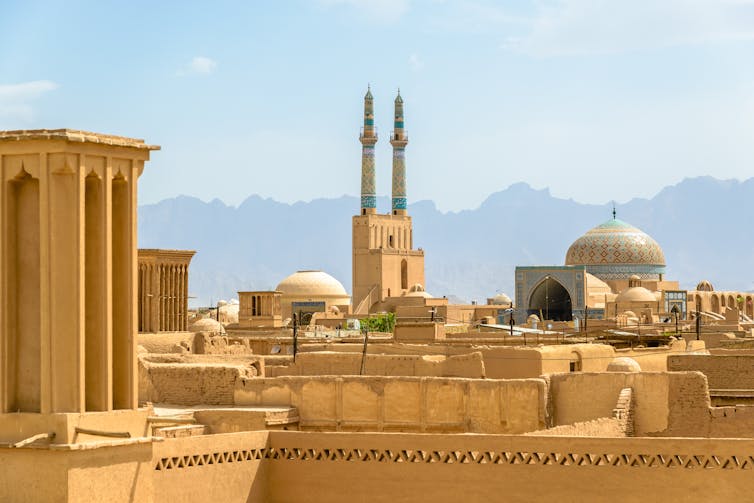
Domed roofs are not only structurally efficient but also thermally responsive. At any given time, one side of the dome is shaded by its own curve, creating a cooler surface that encourages air movement and passive cooling.
Houses are centred around courtyards that create microclimates within enclosed spaces (Bagh-e-Khaneh). High walls, minimal external windows and windcatchers (badgirs) regulate airflow while limiting solar radiation.
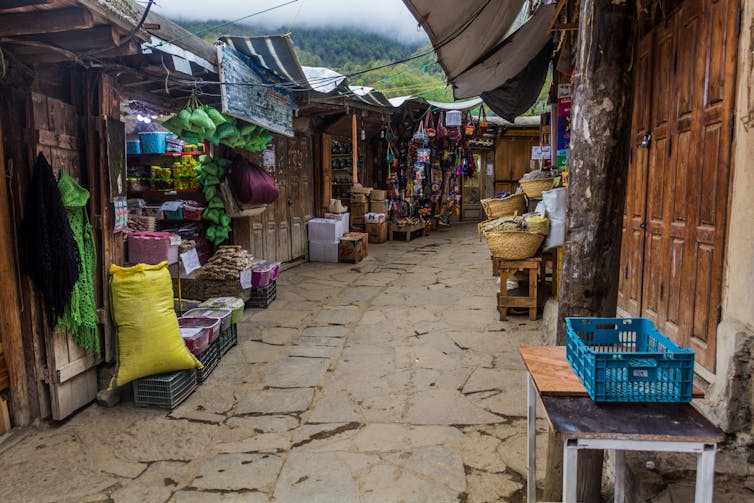
The openness of homes, markets and farms contributed to women being active participants in public life.
Matyas Rehak/Shutterstock
Architecture in this region is characterised by open structures, deep eaves, elevated wooden houses and interconnected communal spaces that resemble traditional Japanese and Far Eastern designs.
The inward-facing design of these buildings historically reinforced social norms that confined women to private domestic spheres, limiting their visibility in urban life.
The introverted south
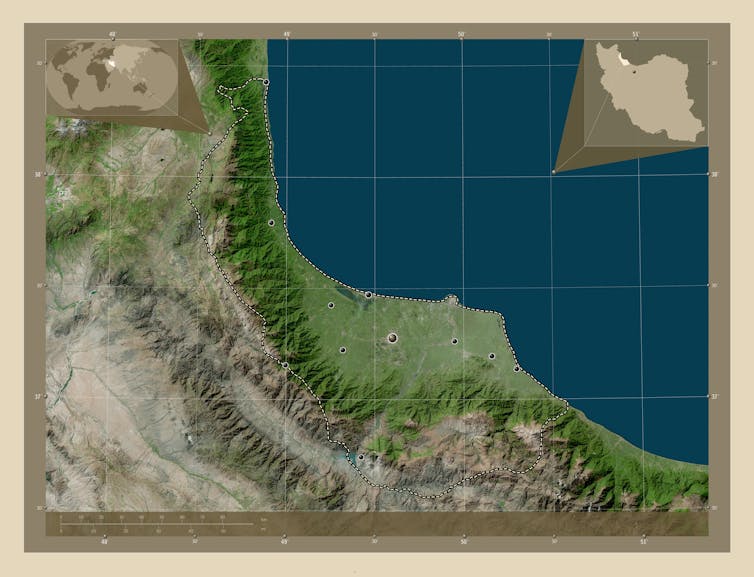
The north of Iran, between the the Alborz Mountain range and the Caspian Sea, enjoys a humid subtropical micro-climate with dense forests and abundant greenery.
Throughout the country, the intricate relationship between climate and culture has shaped architectural forms in ways that make it difficult to delineate where one influence ends and the other begins.
However, climate alone does not fully explain these differences.
Jakob Fischer/Shutterstock
In the north, nature has always been seen more as a friend than a threat.
The way climate and culture shape Iranian architecture is complex.
In more conservative or arid regions, architectural boundaries enforce stricter gender divisions. But here, the architecture facilitated organic interactions across gender and age groups.
Architecture built gender segregation into the physical fabric of the city, shaping women’s roles, routines and social interactions for generations.
MehmetO/Shutterstock
In response, the architecture became sheltered and self-contained. Architecture in southern and central Iran relies almost entirely on earth-based materials such as mud brick (khesht), adobe and fired brick.
The harsh desert conditions in southern and central Iran were more like an opposing force or army. The climate was something to defend against, unlike the friendlier climate of the north.
In Iran, architecture does not just reflect the climate. It also shapes social spaces and gender roles.
Climate and culture
The emphasis on community-based living and social interaction also reflects the role of women in agricultural, economic and social activities in northern Iran.
Building materials are drawn directly from the surrounding soil. The architecture is deeply rooted – both literally and culturally – in its environment.
Northern Iran’s humid climate, abundant rainfall and fertile land allowed for greater agricultural and pastoral productivity. With easier access to food, water and materials, the domestic burden was reduced. This enabled women to participate more actively in public and economic life, including market trade, rice farming and animal husbandry.
muratart/Shutterstock
The built environment in the south is introverted. Central Iran, particularly cities like Yazd and Isfahan, is characterised by a harsh arid climate, where architecture has evolved to minimise exposure to extreme heat and sunlight.
The harsh desert climate, combined with cultural norms around modest clothing, often confined women to the interior spaces of the home. Architectural features which were essential for passive cooling and privacy shaped a lifestyle centred around the domestic sphere.
The integration of nature into built spaces, seen in Iranian veranda-like ayvans and Japanese engawa, reflects a philosophical alignment that prioritises harmony between architecture and the environment.


